
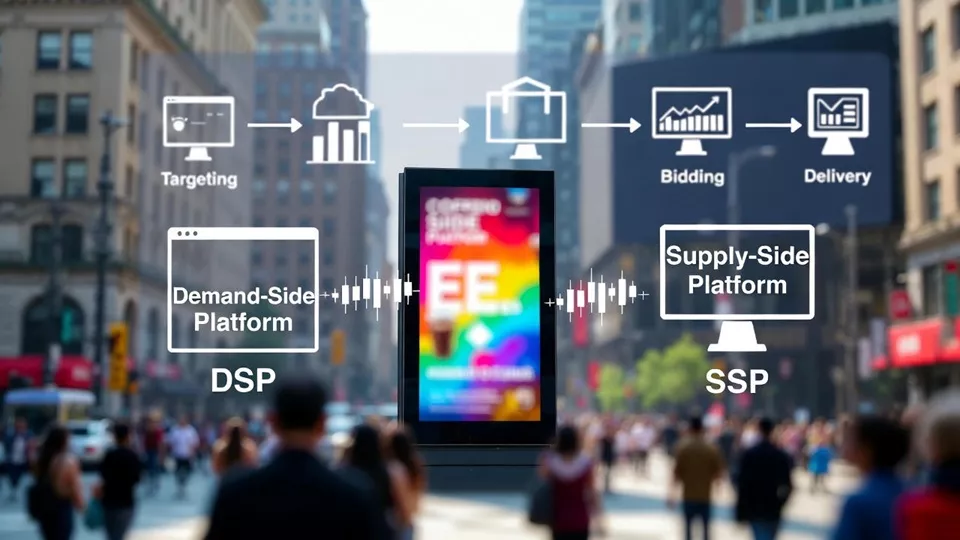
Welcome back to pDOOH.space! If you’ve read our previous posts on What is Programmatic OOH? Advantages & Benefits and What is pDOOH? Programmatic Digital Out-of-Home, you now have a solid grasp of what programmatic digital out-of-home (pDOOH) advertising is all about. It’s the smart, automated way to get your ads on digital screens in the real world like billboards, transit shelters, or mall displays without the hassle of manual negotiations.
But how does it actually work? How does your ad go from a simple click in your dashboard to lighting up a screen in front of your target audience? In this beginner’s guide, we’ll break it down step by step. Think of pDOOH as a high-tech marketplace where ads are bought and sold in real time, like a lightning-fast eBay auction for billboard space. We’ll use simple analogies, clear explanations, and some visual aids to make it all click. Let’s dive in!
1. The Programmatic Cast of Characters (The Ecosystem)
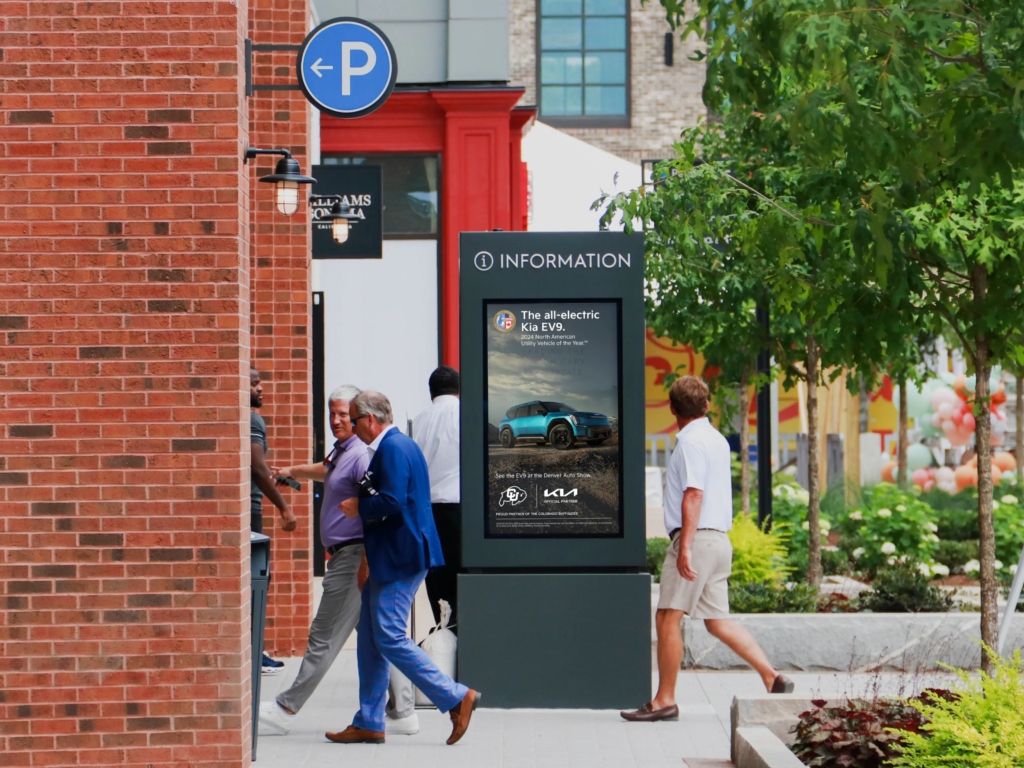
Before we get into the action, meet the key players in the pDOOH world. It’s like a theater production: everyone has a role, and they work together seamlessly behind the scenes. We’ll split them into the buyer’s side (that’s you, calling the shots) and the seller’s side (the folks providing the screen space).
The Buyer’s Side (The Commander)
- The Advertiser: (You!) The brand with the budget. You’re the star of the show, the company or marketer who wants to promote a product, service, or message. You decide what the ad looks like, who sees it, and how much you’re willing to spend. In pDOOH, you’re not haggling over phone calls; you’re using tech to automate it all.
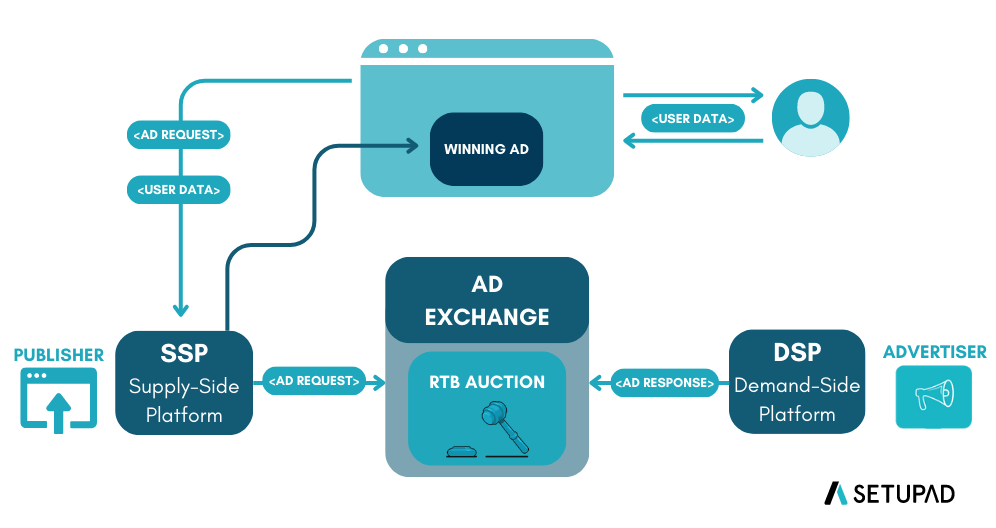
- The DSP (Demand-Side Platform): Your mission control. This is the software platform you log into to run your campaigns. Think of it as your personal command center, like the cockpit of a spaceship. Popular DSPs for pDOOH include Google Display & Video 360, The Trade Desk, or specialized ones like Broadsign or Vistar Media. Here, you upload your ad creatives, set your goals, and let the system do the bidding (literally) on your behalf.
The Seller’s Side (The Inventory)
- The Screen Owner/Media Operator: The company that owns the physical billboard. These are the folks who install and maintain the digital screens in high-traffic spots, like airports, highways, or shopping centers. Companies like Clear Channel Outdoor or JCDecaux own vast networks of these screens and make their “inventory” (available ad slots) accessible programmatically.
- The SSP (Supply-Side Platform): The system the screen owner uses to list their available slots (inventory) and prices. This is the seller’s equivalent of the DSP, it’s software that connects the screen owners to the marketplace. The SSP packages up details about each ad slot (location, time of day, audience data) and puts it up for auction. Examples include Magnite or PubMatic, adapted for DOOH.
Together, these players form a connected ecosystem where buyers and sellers meet through automated exchanges (like Ad Exchanges or Private Marketplaces). No more middlemen slowing things down, it’s all digital and efficient.
2. The Heart of the Process: Real-Time Bidding (RTB) Explained
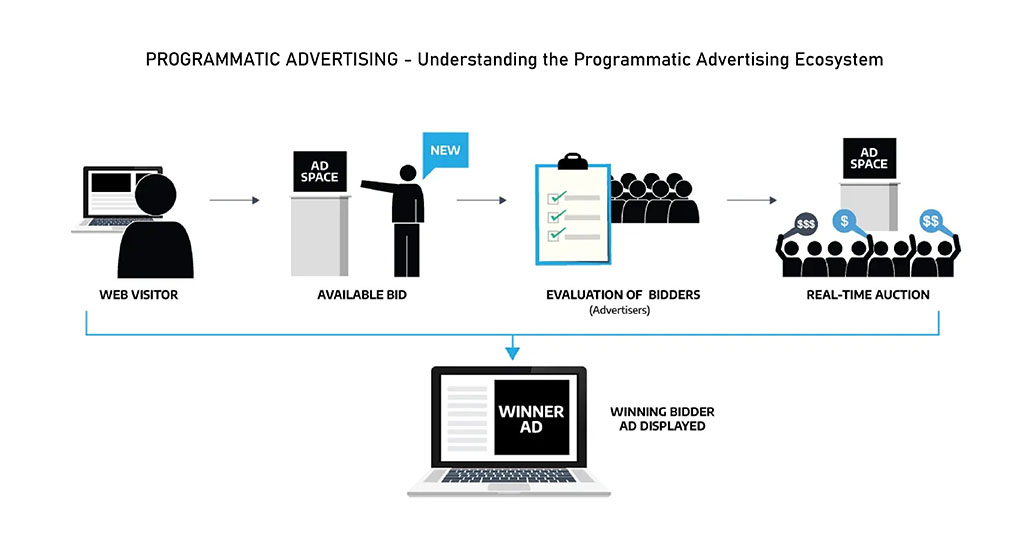
Now that you know the cast, let’s get to the drama: the actual buying process. At the core of pDOOH is Real-Time Bidding (RTB), which happens in the blink of an eye – literally milliseconds, every time an ad slot becomes available. Imagine a bustling stock exchange where shares (ad slots) are traded instantly based on data. Here’s how it unfolds:
- The “Ad Call”: A screen slot is about to be open, and the SSP sends a signal. Picture this: A digital billboard on a busy street is finishing one ad and has a 15-second slot coming up empty. The screen owner’s SSP broadcasts an “ad request” to the ad exchange, saying, “Hey, I’ve got a slot available in 3 seconds! It’s in downtown New York, during rush hour, with high foot traffic from young professionals. Who’s interested?” This signal includes rich data like location, time, weather, or even nearby events.
- The “Auction”: All DSPs review the slot and the data attached. Your DSP (and others) gets this alert and quickly checks if it matches your campaign rules. Does the location fit? Is the audience right? What’s the weather like? In a split second, multiple advertisers’ DSPs submit bids based on how valuable that slot is to them. It’s like bidders at an auction house raising paddles, but automated and data-driven.
- The “Winning Bid”: The highest relevant bid wins the right to display the ad for that short time. The ad exchange picks the winner usually the highest bidder who meets the seller’s minimum price. Your ad is then pushed to the screen almost instantly. If you win, congrats – your message is live! If not, no worries; your DSP moves on to the next opportunity without wasting your budget.
This RTB magic ensures ads are relevant and timely, maximizing impact while keeping costs efficient. No more blanket buys; it’s precision targeting at scale.
3. Setting Your Rules (The Campaign Setup)
Here’s where you take control. Programmatic isn’t just automated, it’s customizable. In your DSP, you set the rules that guide how and when your DSP bids in those RTB auctions. Think of it like programming a smart thermostat: you define the conditions, and the system handles the rest. Let’s break down the key elements:
- The Budget: How to set pacing (how fast you spend the money). Decide your total spend (e.g., $5,000 for a week-long campaign) and how it’s distributed. Pacing options like “even” (spread out evenly) or “accelerated” (front-load for quick impact) ensure you don’t blow the budget too soon or miss opportunities.
- The Target Audience (The “Who”): Using mobility data to only bid when the right type of people are likely to be passing by. pDOOH leverages anonymized data from mobile devices, foot traffic sensors, or even vehicle counts. For example, target “parents with kids” near playgrounds or “commuters” on highways. Your DSP only bids when the data suggests your ideal audience is nearby, making every impression count.
- The Contextual Triggers (The “When & Why”): Detailed examples of conditional logic. This is the “programmatic” superpower, rules based on real-world conditions. Set if-then scenarios to bid smarter:
- Example: Only bid for your coffee shop ad IF the local weather is below 10°C AND it’s between 7:00 AM and 9:00 AM. (Perfect for promoting hot drinks on chilly mornings!)
- Another example: Bid higher for a sunscreen ad IF UV index is high AND near beaches during weekends.
- One more: Trigger a promo for rain gear IF it’s raining AND traffic data shows slow-moving cars (people stuck in the rain might notice your ad more).
These triggers use data feeds from weather APIs, traffic reports, or even news events, all integrated into the DSP.
- The Creative Dynamic: Briefly explain how the system can automatically switch between a “hot coffee” ad and an “iced coffee” ad based on the trigger. Take it up a notch with dynamic creatives. Upload multiple ad variations, and the system selects the best one on the fly. If it’s a hot day (above 25°C), show the iced coffee version; if cold, switch to hot. This personalization boosts engagement without manual tweaks.
By setting these rules upfront, your campaign runs on autopilot, adapting to the real world in real time.
Wrapping It Up: Your First pDOOH Campaign Awaits
There you have it, a step-by-step journey from clicking “launch” in your DSP to seeing your ad campaign come alive on a digital screen. Programmatic DOOH demystifies advertising by putting power in your hands through smart tech, data, and automation. It’s efficient, targeted, and scalable, perfect for brands big and small.
Ready to try it? Start small: Sign up for a DSP demo, sketch your rules, and watch the magic happen. Stay tuned for our next post, where we’ll dive into measuring pDOOH success, from impressions to real-world ROI.
What do you think? Have questions or campaign ideas? Drop a comment below or reach out on social media. Let’s keep the conversation going!
Also, read: What Is Programmatic OOH? Advantages & Benefits Explained
Affordable DOOH Advertising Packages for Retail & Restaurant Chains in Singapore