

For decades, out-of-home (OOH) advertising has been known for its unmatched reach and real-world impact. Yet one persistent challenge has held many advertisers back: measurement.
Traditional outdoor campaigns relied heavily on estimated impressions, traffic counts, and post-campaign brand studies. While these methods offered directional insights, they often fell short of providing the accountability that modern marketers expect from digital channels.
Programmatic Digital Out-of-Home (pDOOH) is changing that narrative. By combining real-world screens with data, automation, and digital measurement frameworks, pDOOH enables advertisers to measure performance, attribute outcomes, and prove ROI with confidence.
This article breaks down how success is measured in programmatic DOOH, the key metrics that matter, and how advertisers can connect outdoor exposure to real business results.
The Measurement Challenge in Traditional OOH
Traditional OOH measurement was largely static and predictive. Campaigns were planned weeks in advance, delivered uniformly, and evaluated after completion.
Common challenges included:
- Reliance on modeled impressions rather than verified exposure
- Limited ability to measure who actually saw the ad
- No real-time optimization once the campaign was live
- Weak linkage between outdoor exposure and online or in-store actions
As marketing shifted toward performance-driven channels like search, social, and programmatic display, OOH was often perceived as a brand-only medium.
Programmatic DOOH addresses these limitations by introducing data-driven delivery, real-time reporting, and attribution frameworks that mirror digital advertising standards.
Core Programmatic DOOH Metrics
Measuring success in pDOOH starts with understanding the right metrics. While some are familiar from digital advertising, their application in a physical environment is what makes them powerful.
Verified Impressions
Unlike traditional estimated impressions, pDOOH uses data signals such as mobile location data, traffic patterns, and screen visibility to calculate verified impressions.
These impressions reflect:
- The number of people likely present near the screen
- Screen orientation and dwell time
- Time-based audience fluctuations
Verified impressions provide advertisers with greater confidence in reach and exposure quality.
VCR (Viewable Completion Rate)
For full-motion or video-based DOOH ads, Viewable Completion Rate (VCR) measures how often an ad played fully while meeting viewability criteria.
A strong VCR indicates:
- High screen visibility
- Appropriate creative length
- Effective placement and timing
In many cases, pDOOH VCRs outperform online video because screens are large, unavoidable, and placed in high-attention environments.
eCPM (Effective Cost Per Mille)
eCPM helps advertisers evaluate the efficiency of their spend by comparing cost against verified impressions delivered.
It allows marketers to:
- Benchmark pDOOH against other digital channels
- Compare screen types, locations, and time slots
- Optimize budget allocation based on performance
Because pDOOH pricing is dynamic, eCPM becomes a crucial optimization metric during live campaigns.
The Power of Attribution in Programmatic DOOH
Attribution is where programmatic DOOH truly differentiates itself from traditional outdoor advertising.
By combining location data, anonymized device signals, and audience modeling, pDOOH enables advanced measurement frameworks that connect screen exposure to real-world actions.
Geofencing and Footfall Attribution
Geofencing allows advertisers to define a physical area around:
- Retail stores
- Event venues
- Transit hubs
- Points of interest
Devices exposed to a DOOH ad are later analyzed to determine whether they:
- Visited a specific location
- Entered a store
- Returned multiple times
This method helps answer a critical question:
Did people who saw my ad actually show up?
Exposed vs. Control Group Analysis
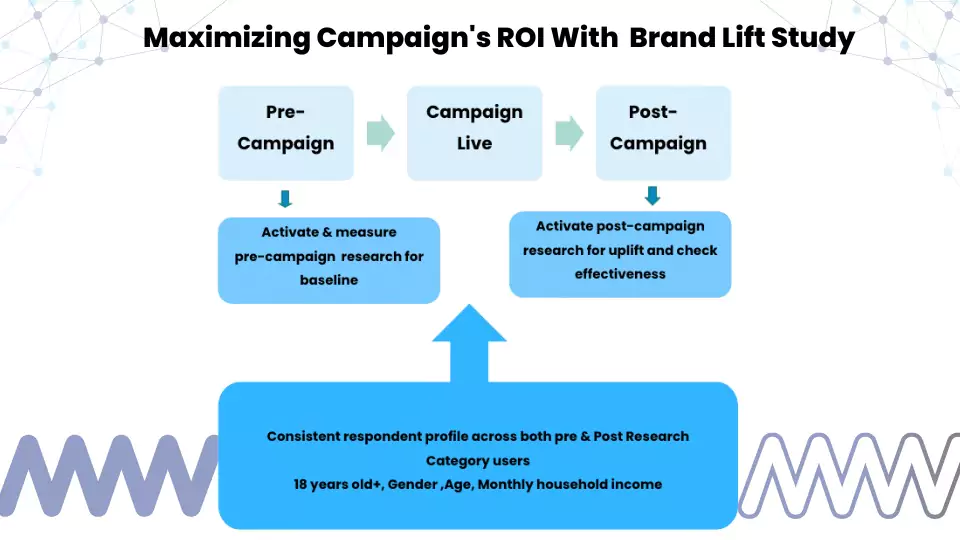
One of the most reliable ways to prove effectiveness is through lift studies.
This involves comparing:
- An exposed group (people near screens when ads played)
- A control group (similar audience not exposed)
By measuring differences in behavior, such as store visits or website traffic – advertisers can demonstrate incremental lift directly attributed to the campaign.
This approach moves OOH measurement from correlation to causality.
Device ID Mapping and Online Attribution
Through privacy-compliant and anonymized device ID mapping, pDOOH can connect exposure to:
- Website visits
- App downloads
- Search activity
- Online conversions
For example:
- A user sees a DOOH ad near a transit station
- Later visits the advertiser’s website
- Or installs the mobile app
This creates a measurable bridge between offline exposure and online action, aligning OOH with performance marketing objectives.
Proving ROI in Programmatic DOOH
Ultimately, advertisers need to justify spend with tangible business outcomes. Programmatic DOOH enables this by tying media delivery to value-based metrics.
Assigning Value to Outcomes
To calculate ROI, advertisers must define the value of:
- A store visit
- A lead
- A purchase
- An app install
For example:
- If an average store visit is worth ₹500
- And the campaign drives 1,000 incremental visits
- The total value generated is ₹5,00,000
Connecting Spend to Results
ROI can then be calculated as:
ROI = (Campaign Value – Ad Spend) ÷ Ad Spend
Because pDOOH provides transparent reporting on exposure, visits, and conversions, advertisers can clearly demonstrate how outdoor media contributes to revenue and growth.
Tips for Campaign Optimization Using pDOOH Data
One of the biggest advantages of programmatic DOOH is live optimization.
Advertisers can analyze performance by:
- Time of day
- Day of week
- Screen location
- Audience segment
- Creative variation
Based on insights, campaigns can be adjusted to:
- Increase spend on high-performing screens
- Pause underperforming time slots
- Refine audience targeting
- Test new creatives mid-campaign
This agility transforms DOOH from a static placement into a living, performance-driven channel.
Also, read: How Programmatic DOOH Buying Works? A Step-by-Step Guide
Final Thoughts
Programmatic DOOH is redefining how outdoor advertising is measured, optimized, and valued.
By introducing verified metrics, advanced attribution models, and ROI-driven analysis, pDOOH enables advertisers to treat outdoor media with the same rigor as digital channels, without losing its unmatched real-world impact.
For brands, agencies, and marketers exploring outdoor advertising today, measurement is no longer a limitation; it’s a competitive advantage.