
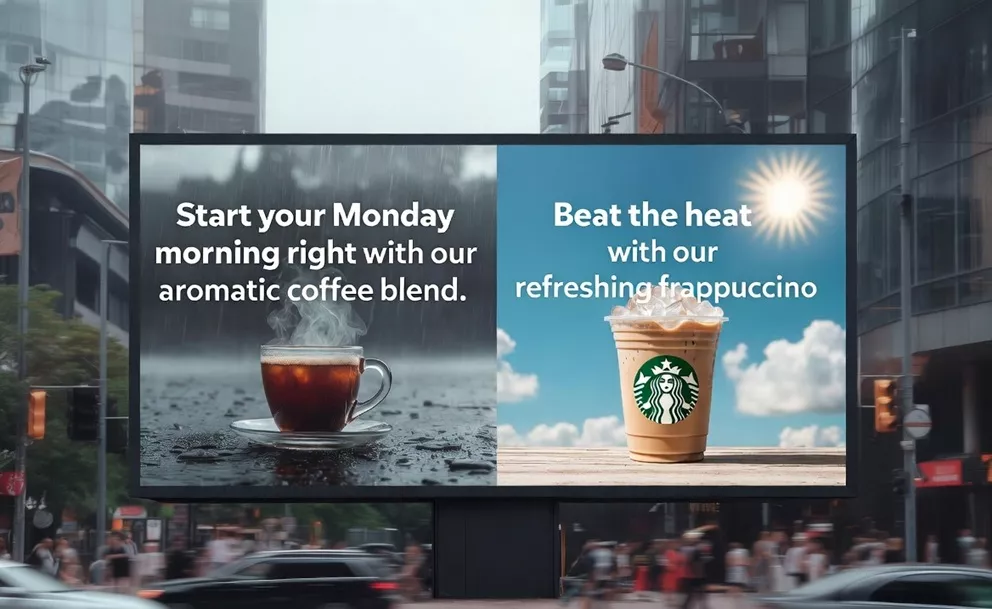
Imagine a digital billboard on a rainy Monday morning displaying a steaming cup of coffee. By the time the afternoon sun breaks through the clouds and the temperature spikes, that exact same screen automatically switches to an ad for an ice-cold frappuccino.
No manual uploading. No scheduling calls with media owners. Just seamless, real-time adaptability.
This isn’t science fiction—it is the reality of Dynamic Creative Optimization (DCO) in Programmatic Digital Out-of-Home (pDOOH). If you already know the basics of what pDOOH is, it’s time to look at the technology that makes it truly revolutionary.
Here is everything you need to know about using DCO to run smarter, highly contextual outdoor advertising campaigns.
What is Dynamic Creative Optimization (DCO)?
In simple terms, Dynamic Creative Optimization (DCO) is an advertising technology that automatically changes the creative elements of an ad (like images, text, or video) based on real-time data triggers.
While DCO has been used in online display ads for years, its integration into the physical world via pDOOH is a massive game-changer. Instead of showing the same static image to everyone who drives past a screen for four weeks, brands can now swap out messaging instantly based on the environment.
Popular Data Triggers for pDOOH Campaigns
The beauty of DCO lies in the data feeds connected to your Demand-Side Platform (DSP). When setting up your campaign, you can define specific “rules” or “triggers” that tell the screen which creative to display.
The most common triggers include:
- Weather Conditions: Serve different ads based on temperature, rain, snow, or UV index. (e.g., an allergy medication ad triggering only when the local pollen count is high).
- Time of Day (Dayparting): A fast-food chain can promote breakfast sandwiches at 7:00 AM and switch to family dinner bundles at 5:00 PM.
- Live Traffic Data: If a digital billboard is on a highway experiencing bumper-to-bumper traffic, a music streaming service can trigger an ad promoting a “Traffic Jam Playlist.”
- Live Sports Scores: Sports betting apps or apparel brands can display live score updates or congratulate a local team on a win the second the game ends.
Why Brands Are Adopting DCO in 2026
If you understand how programmatic DOOH buying works step-by-step, you know that efficiency is the primary goal. DCO takes that efficiency and applies it directly to the creative side of your campaign.
1. Hyper-Relevance Drives Action
Consumers are bombarded with thousands of marketing messages daily. A generic ad blends into the background, but an ad that reflects exactly what a person is experiencing in that exact moment commands attention. Contextual relevance significantly increases brand recall and foot traffic.
2. Cost Efficiency and Less Waste
Why pay to advertise umbrellas on a sunny day? With DCO, your ad spend is only utilized when the environmental conditions match your product’s use case. This makes measuring programmatic DOOH success much more exciting, as your Return on Ad Spend (ROAS) naturally improves.
3. Streamlined Production
Instead of manually designing 50 different billboards for 50 different scenarios, a brand can create a single “dynamic template.” The DCO platform automatically swaps out the background, the headline, or the product image based on the live data feed.
The Technology Making It Happen
Executing a DCO strategy requires a solid ad-tech stack. It relies on the seamless communication between Demand-Side Platforms (DSPs), Supply-Side Platforms (SSPs), and powerful DOOH operating systems.
For instance, global technology platforms like Moving Walls provide the necessary infrastructure and location intelligence to automate these complex, multi-screen campaigns across different regions. Additionally, as industry standards evolve—often guided by organizations like the Out of Home Advertising Association of America (OAAA)—the integration of live data feeds into DOOH screens is becoming more accessible for agencies and direct-to-consumer brands alike.
Getting Started with DCO
The shift from static outdoor advertising to dynamic, programmatic execution is happening faster than ever. If you want to future-proof your marketing strategy, start small:
- Identify your best trigger: Does your product sell better in the rain, or during the morning commute?
- Build a dynamic template: Create a base ad with specific elements (like a headline or hero image) that can be swapped out.
- Test and measure: Run an A/B test comparing a standard pDOOH ad against a DCO-enabled ad to see the difference in engagement.
Want to dive deeper into how pDOOH is evolving? Check out our insights on the future of sustainable OOH advertising to see how digital screens are becoming greener and smarter.