
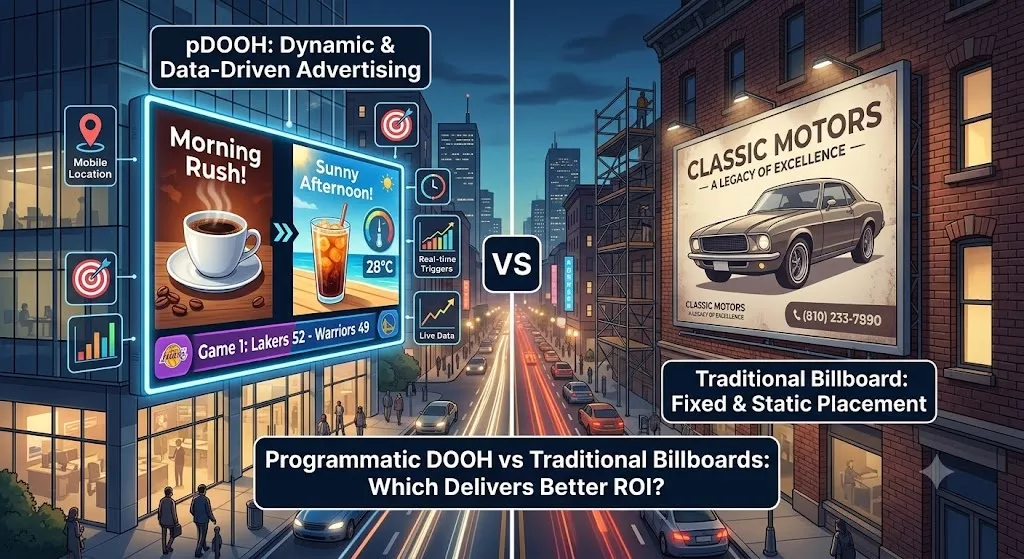
For decades, out of home advertising was a simple game. A brand would rent a physical billboard on a busy highway, print a massive vinyl poster, and leave it there for a month or two. While this method successfully builds brand awareness, modern marketing demands more flexibility, better data, and higher efficiency.
Enter Programmatic Digital Out of Home advertising. By bringing the speed and targeting of digital marketing to physical outdoor screens, the industry has completely transformed.
If you are planning your next major campaign and wondering where to allocate your budget, here is a deep dive into programmatic DOOH versus traditional billboards and why the digital route is winning.
Speed and Flexibility of Execution
One of the biggest drawbacks of traditional billboards is the slow turnaround time. Launching a static campaign involves negotiating with media owners, printing massive materials, and paying for manual installation. If you need to change your message halfway through the month, you have to start the entire expensive process over again.
In contrast, programmatic buying operates in real time. Once you understand how programmatic DOOH buying works, you will see that launching an outdoor campaign is now as easy as launching a social media ad. Through Demand Side Platforms, advertisers can bid on digital screens, upload their creatives, and go live within hours. If a message is not resonating, you can pause or swap the creative instantly with a few clicks.
Advanced Targeting vs Spray and Pray
Traditional billboards rely on the “spray and pray” approach. You pick a location with high traffic and hope your target audience drives by. You pay for every single person who sees the ad, even if they have zero interest in your product.
Digital out of home turns this model upside down. Modern ad tech utilizes aggregated mobile location data to understand the movement patterns of specific audiences. If you want to reach fitness enthusiasts, you can set your campaign to display ads on screens near gyms specifically during the morning or evening rush hours. This precision targeting is one of the core advantages and benefits of programmatic OOH, ensuring your budget is only spent when your ideal customers are actually nearby.
Global ad tech platforms like Moving Walls provide the robust data infrastructure required to execute these highly targeted campaigns across thousands of premium digital screens worldwide.
Creative Capabilities and Context
A paper billboard will always look exactly the same, whether it is raining, snowing, or burning hot outside. It lacks context.
Digital screens offer limitless creative possibilities. Brands can use dynamic creative optimization to change their messaging based on real time environmental triggers. A clothing brand can promote sunglasses when the sun is shining and instantly switch to raincoats when the weather turns bad.
Furthermore, digital screens allow for full motion video and animations. According to research cited by top business outlets like Forbes, moving visuals capture human attention significantly faster than static images, leading to better brand recall and higher conversion rates.
Eco Friendly Advertising
Brands are facing increasing pressure to adopt environmentally friendly practices. Traditional billboards require huge amounts of PVC vinyl and paper, much of which ends up in landfills after a campaign concludes.
The shift toward digital screens eliminates this physical waste entirely. As the industry pushes toward more sustainable advertising, media owners are upgrading their digital displays to use highly efficient LED technology and renewable energy sources, making programmatic buying the greener choice for eco conscious brands.
The Final Verdict on ROI
Ultimately, the choice between traditional and digital comes down to the return on investment.
While traditional billboards might offer a lower upfront cost for a long term placement, the lack of flexibility and targeting often leads to wasted ad spend. With digital programmatic screens, you have complete control over your budget. You can set frequency caps, track footfall attribution, and gather precise analytics. This level of transparency makes measuring pDOOH success and return on investment far superior. Organizations like the OAAA consistently report that integrating digital out of home into an omnichannel strategy boosts the overall effectiveness of all other digital marketing efforts.
For brands that want agility, intelligent data, and dynamic creativity, programmatic DOOH is the clear winner for 2026 and beyond.